Explore Porto-Vecchio and Its Surroundings
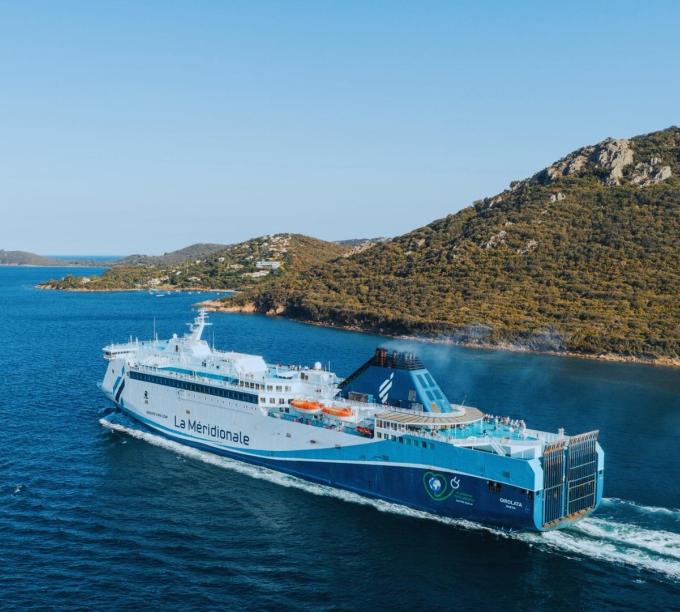
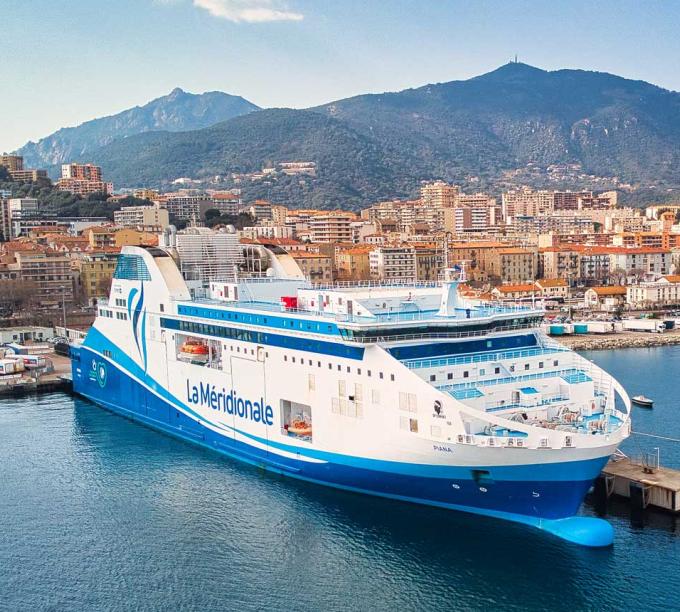
Looking for nature, relaxation, and a change of scenery? Visit Porto-Vecchio! La Méridionale takes you on a journey to discover the City of Salt, the Alta Rocca region, and Southern Corsica. On the agenda: dream beaches, unforgettable hikes, and a relaxing crossing aboard our ferry to Porto-Vecchio.
Things to Do in Porto-Vecchio
After disembarking from your ferry in Porto-Vecchio, take a few days to explore the town. As the third most populous town in Corsica, it is one of the island's most popular holiday destinations. Like the rest of the island, Porto-Vecchio can be visited all year round. In summer, the atmosphere is lively and festive, while winter brings mild weather and a more peaceful, intimate setting.
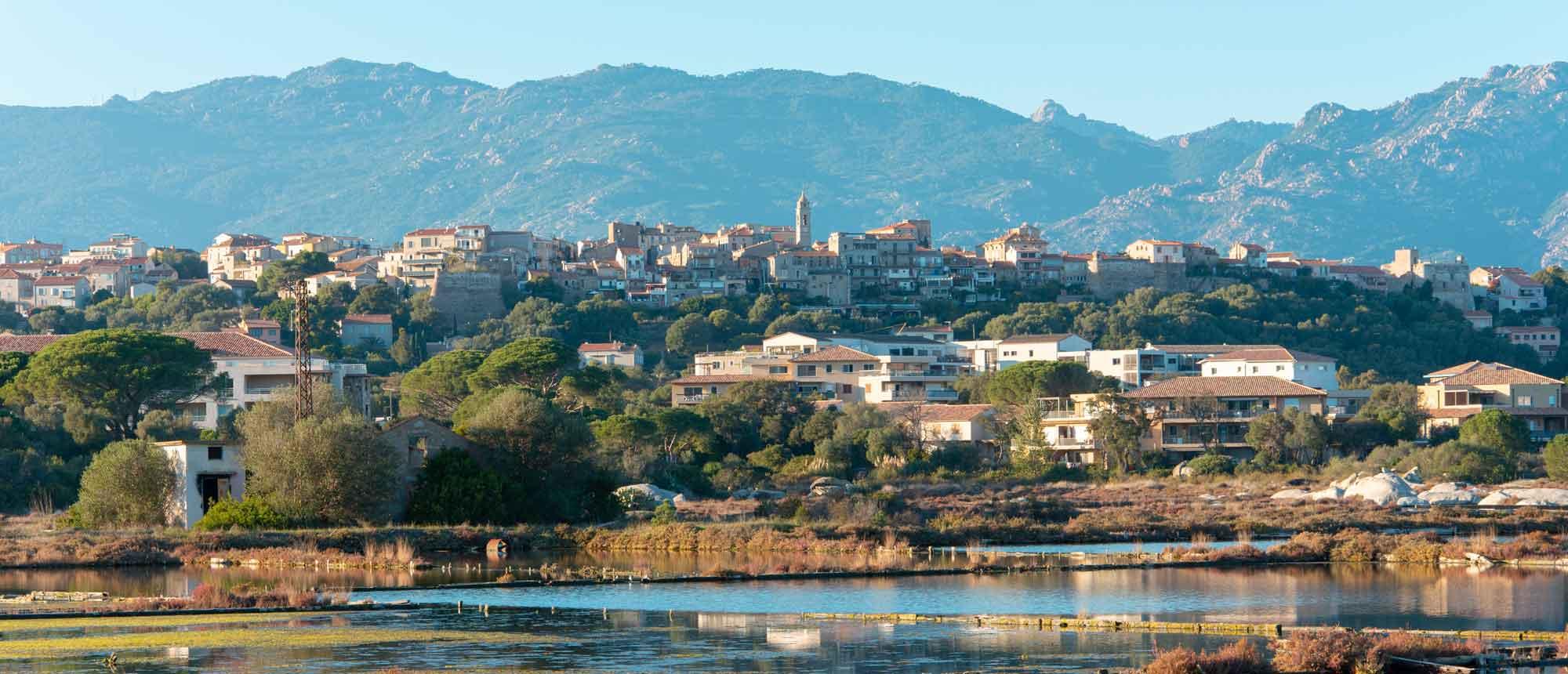
Founded by the Greeks in ancient times and flourishing in the 16th century under Genoese influence, Porto-Vecchio retains many traces of its past. The most striking is its citadel. Its five bastions still tower over the town. From their watchtowers, just like the guards who once stood there, you can watch ships entering and leaving the harbour. The Genoese Gate is also still standing, offering breathtaking views of the salt marshes.
Next, explore Porto-Vecchio and its old town. Wander through its narrow streets until you reach the Church of Saint John the Baptist. After admiring its stained-glass windows and trompe-l'œil paintings, settle down at one of the many restaurants lining Place de la République. Here, you can enjoy local specialities while taking in views of the bell tower and the Chapel of the Holy Cross.
Finally, head to the Port of Porto-Vecchio to admire the upper town and its fortifications from the waterfront. The harbour area is also perfect for a leisurely stroll, accompanied by the gentle sound of the waves and the clinking of boat masts.
Must-See Places Near Porto-Vecchio
After spending several days exploring Porto-Vecchio, have you discovered every corner of the old town and sampled the ice cream parlours around the harbour? It's time to venture further afield!
Natural Attractions Near Porto-Vecchio
Make the most of your holiday in Porto-Vecchio by exploring some of the Isle of Beauty's most iconic natural sites.
The Salt Marshes of Porto-Vecchio
In Corsica, Porto-Vecchio is nicknamed the City of Salt. Its salt marshes supplied a third of the island's salt production until the early 2000s. Although the salt workers have since ceased operations, they left behind traces of their activity. Look closely and you'll spot the tracks once used by wagons carrying white gold, an old pumping system, and the remains of storage buildings.
Today, nature has reclaimed these ten hectares. Pink flamingos, seagulls, and a few cormorants inhabit the tiled ponds. But the star of the marshes is Harris, a grey pelican. After escaping from a reserve in southern France, this large wading bird made the salt marshes his home. He now enjoys a peaceful life alongside grey herons and wagtails.
The Tappa Archaeological Site
After your birdwatching adventure, it's time to play archaeologist. Tappa is just a 15-minute drive from the Port of Porto-Vecchio. This unspoilt, little-visited archaeological site is more than 4,000 years old. At the top of a hill, you'll discover a torra, a typical Bronze Age monument, as well as the remains of several dwellings.
The Alta Rocca Region
No visit to Porto-Vecchio and its surroundings is complete without exploring Alta Rocca. Bordered by the Bavella and Ospedale mountain ranges and the Cuscionu plateau, the "High Rock" region offers a concentrated taste of the very best Corsica has to offer. Forests, waterfalls, villages, and beaches await you just 30 minutes from the City of Salt.
The Ospedale Forest
In the 19th century, residents of Porto-Vecchio fleeing malaria would head into the mountains in search of fresh air. They found refuge in Ospedale. Today, the hamlet and its forest welcome visitors seeking peace, quiet, and nature.
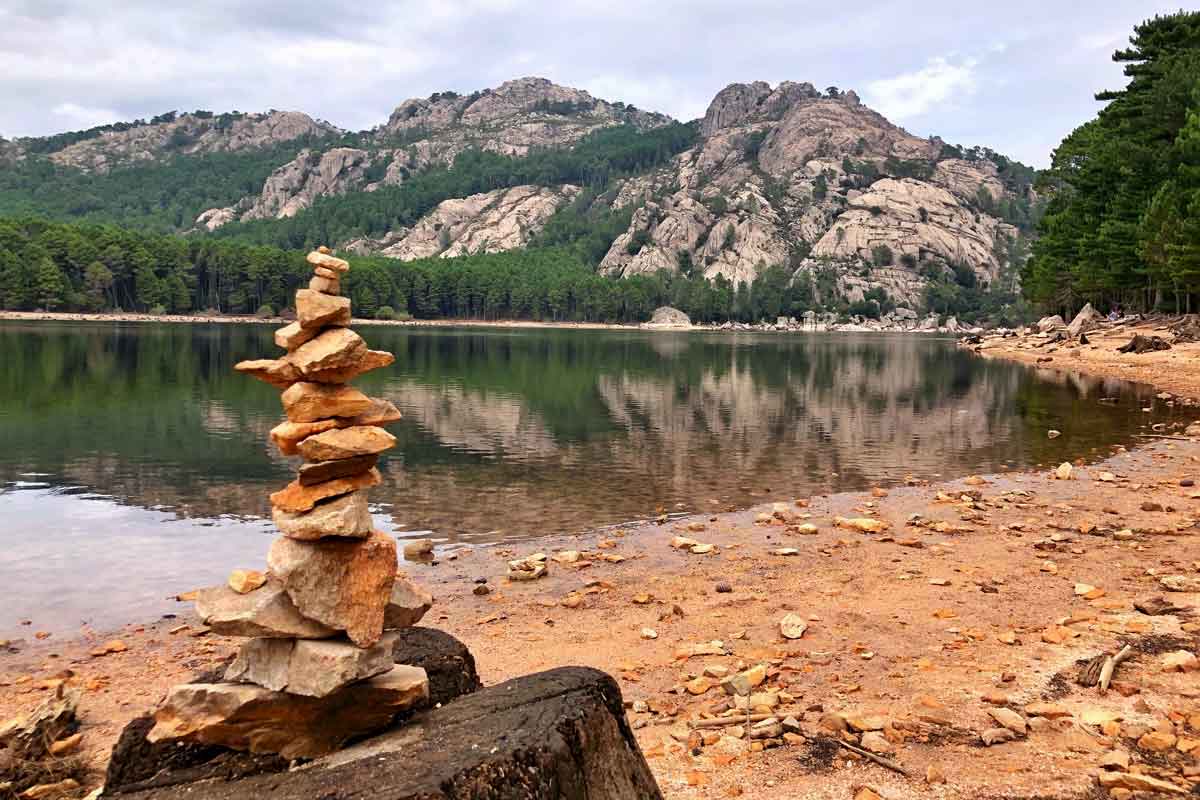
Hiking trails wind through Corsican black pines and beech trees. They are popular with walkers and are also home to mouflons, pigs, and a few frogs. One route takes you to the Ospedale Dam, at an altitude of nearly 1,000 metres. The reservoir forms an artificial lake whose azure-blue waters contrast beautifully with the dark green pine forest. However, swimming is prohibited! The reservoir supplies water to the entire Porto-Vecchio region.
Piscia Waterfall
Not far from Lake Ospedale, a trail begins that will take you to the pine waterfall, known in Corsican as Piscia di Ghjaddu. Conifers won't be your only companions along the way. Here and there, you'll encounter taffoni strangely shaped rock formations sculpted by erosion.
Piscia Waterfall comes into view after a 45-minute walk. But even before you see it, you'll hear the sound of water cutting through the rock and plunging more than 60 metres down. Families with young children can enjoy the spectacle from the trail, while experienced hikers can tackle the final 500 metres, the steepest section, to get a closer look at the waterfall.
The Village of Zonza
The village of Zonza is nestled in the heart of the forest, at an altitude of almost 800 metres. It covers an area of 134 square kilometres between the Tyrrhenian Sea and the Aiguilles de Bavella. This vast natural playground offers plenty of opportunities for hiking, sunbathing on sandy beaches, and exploring the woods by bike.
Zonza also boasts a unique cultural heritage. The village is home to the Corsican Resistance Museum and several churches, including the Santa Maria Assunta Chapel, one of the few Neo-Gothic buildings on the Isle of Beauty.
Cucuruzzu Archaeological Site
You can travel even further back in time with a visit to Cucuruzzu. This Bronze Age archaeological site is listed as a UNESCO World Heritage Site.
In this settlement built among granite rocks, you can imagine how the first Corsicans lived. Around 2,000 BC, they built a defensive wall, dwellings, and a torra. These ancient stones have stood the test of time and can still be seen today among the pine and oak trees.
The Aiguilles de Bavella
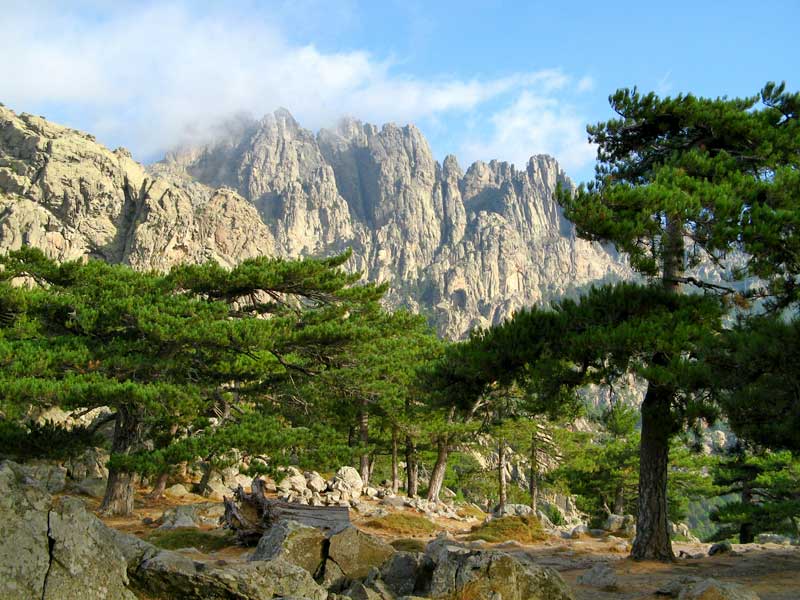
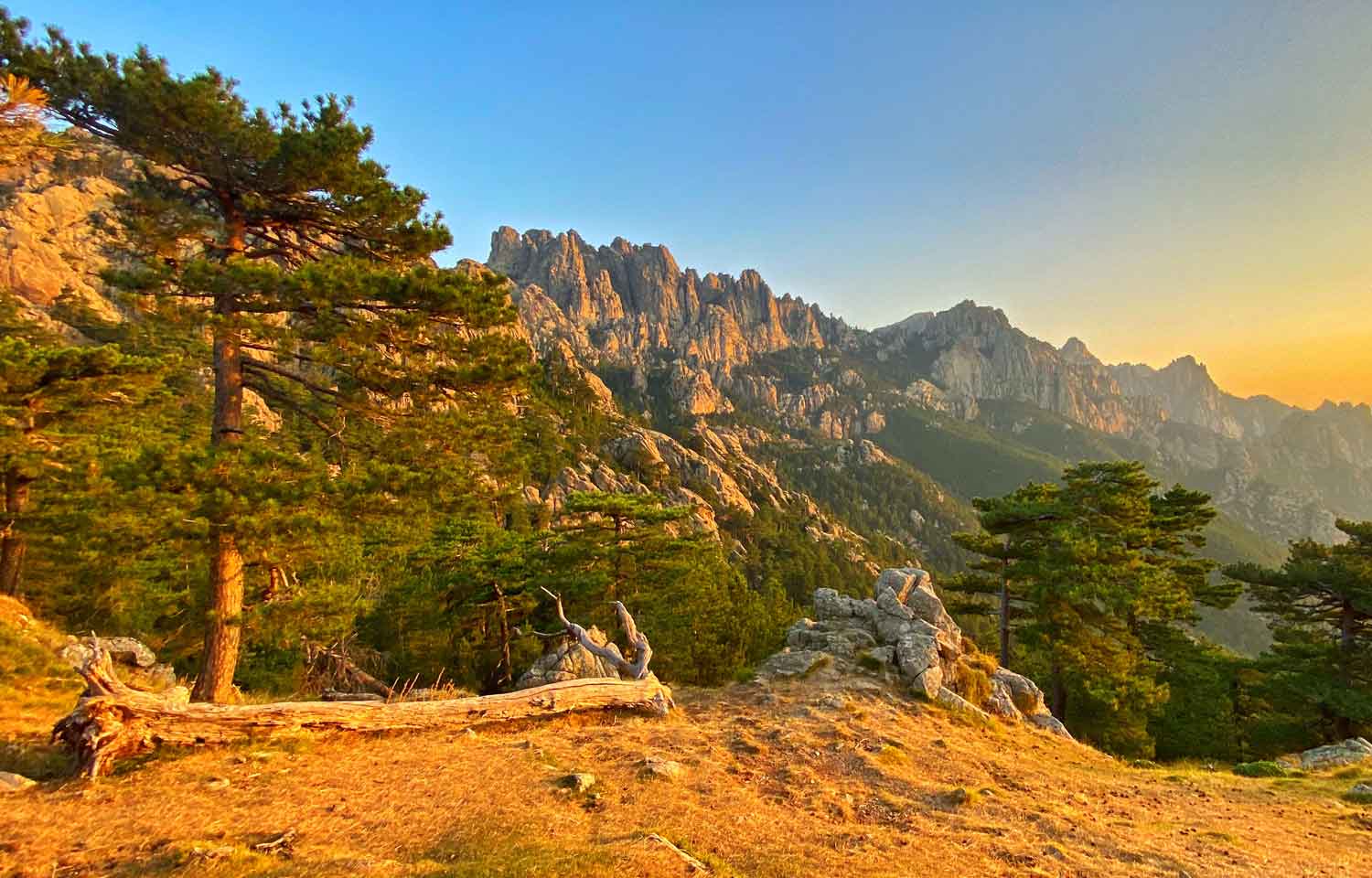
You have probably heard other travellers talking about them during your Marseille–Porto-Vecchio ferry crossing. You may even have spotted them along the road to Alta Rocca. The Aiguilles de Bavella are the region's crown jewel. After all, how could you not be drawn to these towering rock faces? Their grey and red hues stand out against the blue sky and the green of the Corsican black pines.
But don't just admire them from a distance! Numerous hiking trails invite you to explore these jagged rock formations from below. Their captivating silhouettes tend to draw all your attention, so try not to get too mesmerised during your excursion. Otherwise, you might miss the mouflons, peregrine falcons, and golden eagles that call this area home.
Hiking in Southern Corsica
The GR20 is not the only hiking trail on the Isle of Beauty. And that’s good news for all casual hikers! There’s plenty to explore in Porto-Vecchio and Southern Corsica, even if you’re not particularly sporty or are travelling with young children.
Punta di a Vacca Morta
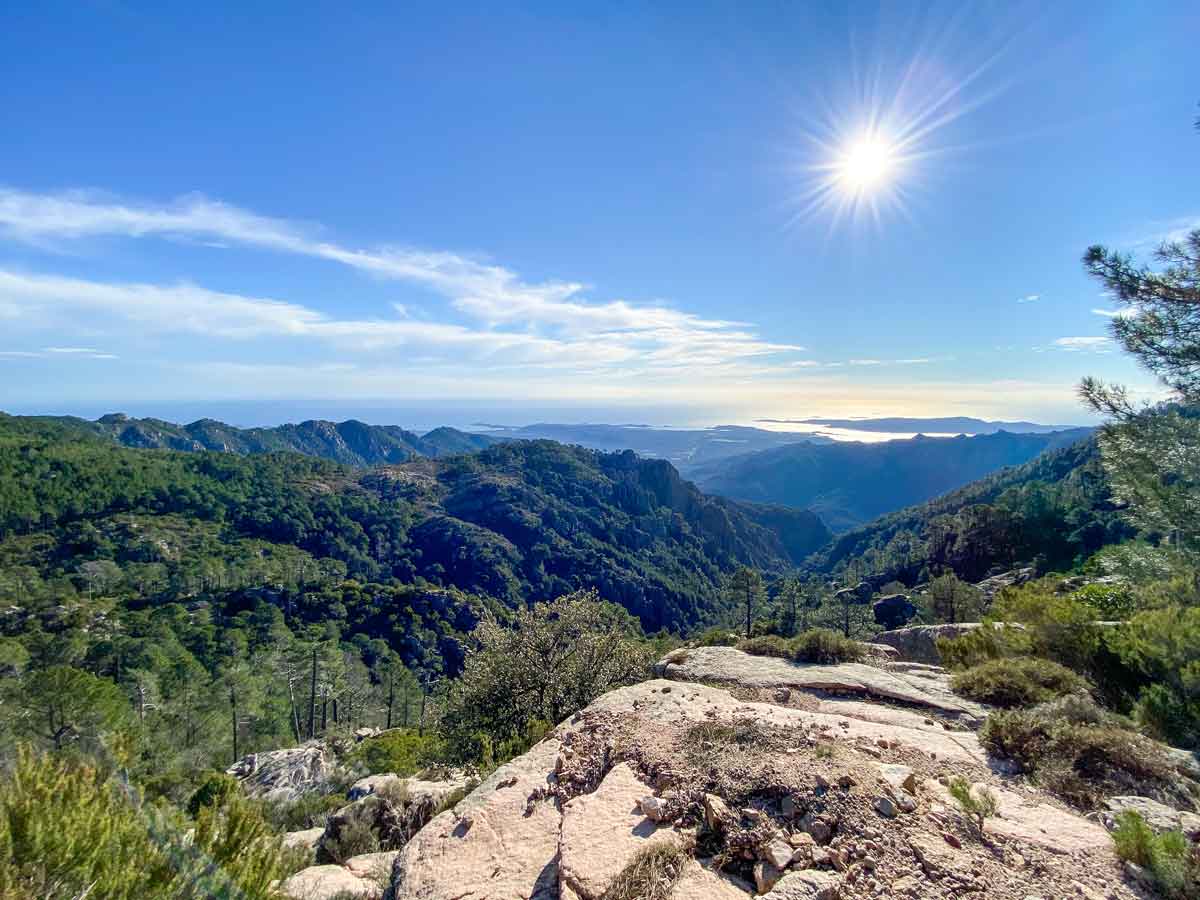
In Corsican, Punta di a Vacca Morta means “Dead Cow Peak”. Don’t let this rather gruesome name put you off! This hike offers one of the most spectacular panoramas on the island, with views of the Aiguilles de Bavella and the Gulf of Porto-Vecchio. On a clear day, you can even see Sardinia.
Before reaching the summit, however, you’ll need to cover around six kilometres, with an elevation gain of 250 metres. Depending on your pace, allow between two and three hours for the round trip.
Pruna Trail
This two-kilometre hike through the Corsican maquis follows a narrow, rocky path. After an hour of climbing, two surprises await you. The first? Pruna, an abandoned hamlet that has been deserted since 1935.
But the ruins of Pruna aren’t your only reward. Continue along the trail beyond this ghost village and discover a stunning 180-degree view over the Bay of Porto-Vecchio.
The Bomb Hole
Head to Alta Rocca for a hike through the pine forests. The Bomb Hole, known locally as U Tafonu di u Cumpuleddu, is an eight-metre-wide opening carved by erosion into the Aiguilles de Bavella.
You can reach it by following a five-kilometre trail. The more adventurous hikers (and those wearing suitable footwear) may try climbing up to the hole to take a few photos. But there’s no need to take any unnecessary risks to fully enjoy the walk. This trail, winding through towering rock faces, offers breathtaking views of the Aiguilles de Bavella.
Beaches in Porto-Vecchio
If you’ve decided to visit Porto-Vecchio, it’s probably for its beaches. The beaches of the City of Salt are among the most beautiful in Corsica.
Palombaggia
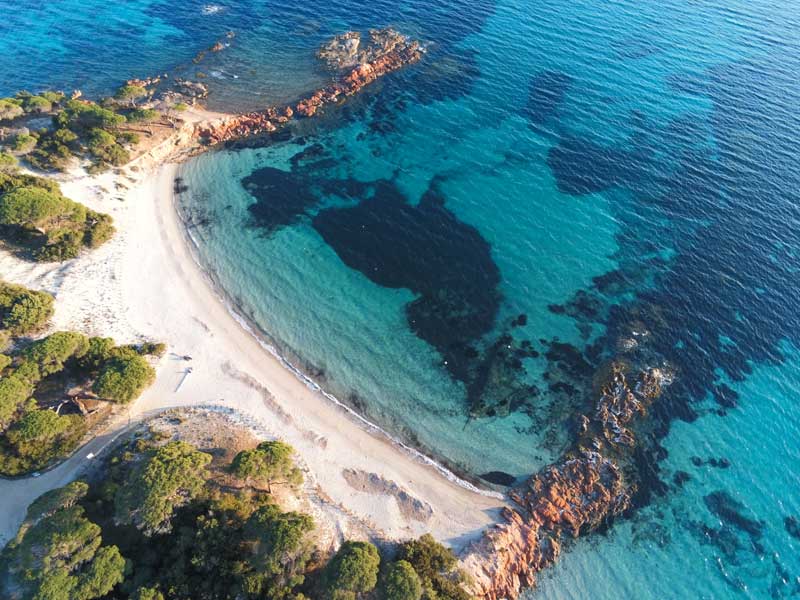
Ask any Corsican, “What is there to do in Porto-Vecchio?” and the answer will almost always be, “Visit Palombaggia.” With its crystal-clear waters and white sand, Palombaggia Beach is one of the most famous beaches on the Isle of Beauty. Its shallow waters make it a safe place for children to swim.
Older visitors, meanwhile, can take advantage of the calm sea to enjoy paddleboarding, kayaking or snorkelling. The sand and underwater seagrass beds are home to wildlife you might never suspect is there while standing on the shore. All it takes is a snorkelling mask and a little patience to spot striped lizardfish and long-snouted seahorses.
Santa Giulia
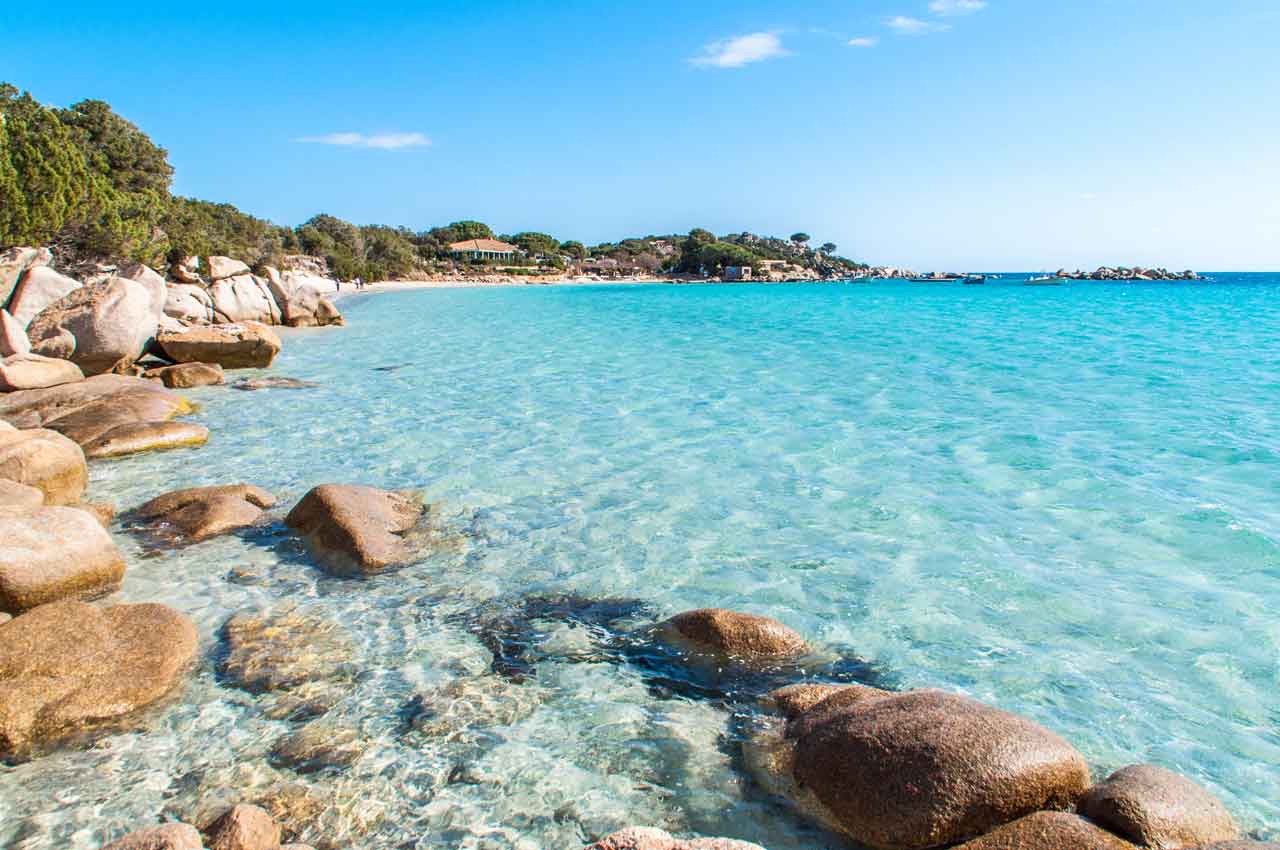
Santa Giulia also boasts fine sand and turquoise waters. In summer, lay your towel in the shade of the umbrella pines and take a swim in the lagoon. Out of season, savour the view of the Cerbicale Islands while enjoying a coffee or a platter of Corsican cured meats at one of the seafront restaurants.
Not the type to sit still? There’s plenty to keep you busy at Santa Giulia. A water sports centre offers introductory sessions in scuba diving, canoeing, water skiing and flyboarding!
Tamaricciu
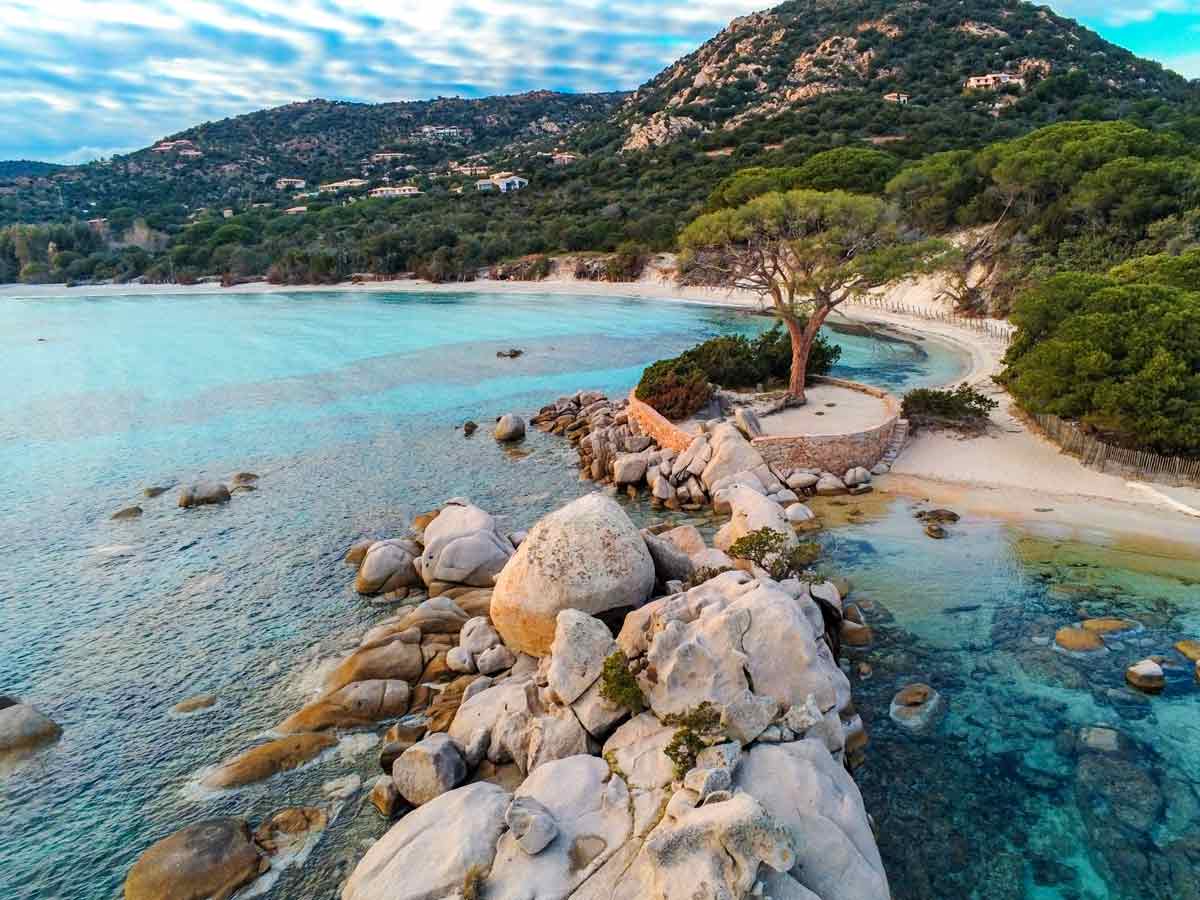
Located just beyond Palombaggia Beach, Tamaricciu has nothing to envy its famous neighbour. You’ll find the same crystal-clear waters and white sand here. However, Tamaricciu stands out thanks to its distinctive stone circle, crowned by an umbrella pine, which has become the beach’s iconic landmark.
Tamaricciu is a favourite spot for swimmers seeking peace and quiet, as well as underwater wildlife. It doesn’t take divers long to spot ornate wrasses, black-headed seabream and starfish.
Cala Rossa
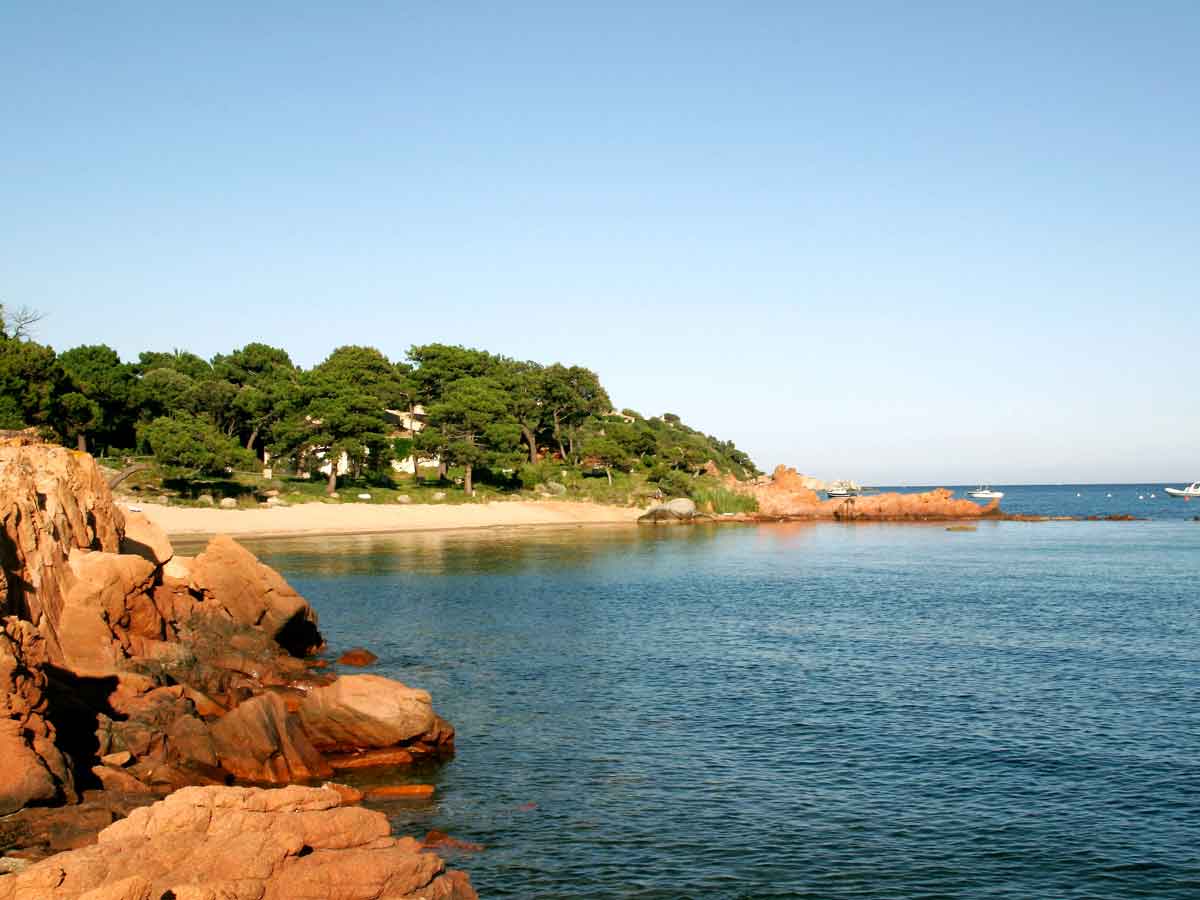
Located on the northern shore of the Gulf of Porto-Vecchio, Cala Rossa Beach has a distinctly French Riviera feel. It stretches out in front of luxurious villas built in the 1970s. But don’t let that intimidate you! The beach, with its fine sand and clear blue waters, is open to everyone.
Unlike Porto-Vecchio’s other beaches, the waters at Cala Rossa are deep. Children may prefer a pedal boat ride to swimming.